
An estate planning attorney helps when your plan needs to do more than outline basic instructions. While some situations can start with simple documents, others require a legal structure to carry out decisions correctly.
As assets, responsibilities, or family dynamics change, planning becomes more detailed. Without proper coordination, documents and asset ownership may not align the way you expect. A clear structure helps reduce confusion and keeps everything working together.
In here, the focus is on when an estate planning attorney is needed, how DIY planning compares, and what to consider based on your situation.
What an estate planning attorney actually helps with
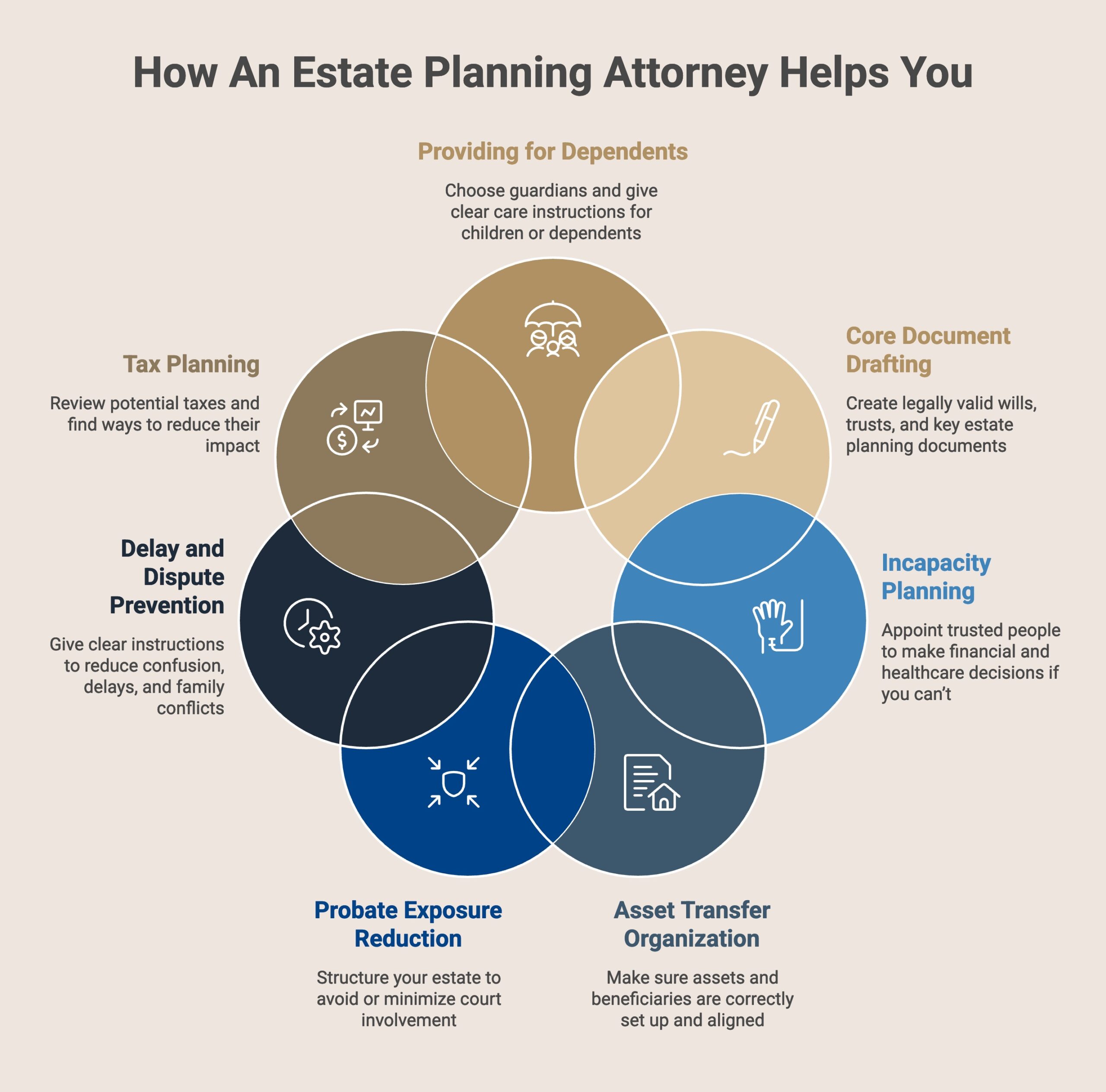
An estate planning attorney sets up the legal structure that determines how your assets are managed during your lifetime and passed on after death. This includes:
- Drafting core documents: Preparing wills, trusts, and related documents so they are valid under state law and reflect your instructions
- Planning for incapacity: Assigning decision-makers through financial and healthcare directives if you are unable to act
- Organizing asset transfers: Reviewing titles and beneficiary designations so assets go to the intended person without conflict
- Reducing probate exposure: Structuring your estate to limit or avoid probate, the court process used to validate a will and distribute assets
- Reducing delays and disputes: Creating clear instructions that help prevent administrative issues and family disagreements
- Addressing tax exposure: Considering how federal and state rules may affect your estate and identifying ways to reduce the impact
- Providing for dependents: Naming guardians and setting clear instructions for the care of minor children
Each part works together as one coordinated plan, helping your estate function as intended and reducing the chance of gaps or inconsistencies.
When you may need an estate planning attorney

You may need an estate planning attorney when your situation involves decisions that require legal structure to work properly and avoid mistakes, such as when:
You have children, dependents, or family complexities
When you have minor children or dependents, an estate planning attorney can establish legal guardianship and set clear instructions for financial support. Guardianship allows a designated person to make decisions about a child’s care and well-being.
For blended families or dependents with special needs, an estate planning attorney can structure asset distribution to ensure intended beneficiaries receive assets and to reduce the risk of disputes or impacts on benefit eligibility.
You own a business, real estate, or out-of-state property
Owning a business or property in more than one location adds legal steps that need to be handled correctly. An attorney can organize how these assets transfer and reduce delays caused by multiple processes.
They can also create a plan for business ownership so that control passes clearly and operations continue without disruption.
You want trusts, tax planning, or asset protection
When your goals include trusts, tax planning, or protecting assets, an estate planning attorney can set these up so they work as intended.
They can structure how assets are distributed, account for tax rules, and help avoid common mistakes that can affect how the plan works later.
DIY estate planning or an estate planning attorney

DIY estate planning works for simple situations, while an estate planning attorney is needed when your plan must handle more than basic asset transfers.
DIY options can work when assets are limited, and beneficiaries are straightforward. Most templates focus on basic documents, but do not account for:
- How assets are owned or titled
- How accounts are set up or designated
- How different parts of the plan need to work together
As your assets or responsibilities increase, the risk of specific mistakes becomes more likely. Documents may not meet legal signing requirements, instructions may be unclear, and assets may not transfer the way you intended. These gaps can lead to delays, disputes, or outcomes that do not match your plan.
An estate planning attorney helps address these issues by turning your decisions into clear legal instructions, aligning documents with how your assets are held, and making sure everything meets state requirements.
They also help account for real situations, including changes in assets, family structure, or responsibilities that basic templates often miss.
Ownership of a business, multiple properties, or a blended family often requires this level of detail to carry out your plan correctly.
Decide what kind of estate planning help you need

The level of help you need depends on your assets, family structure, and tolerance for risk. A simple estate may start with basic documents, but more complex situations benefit from professional guidance.
- You may need an attorney if you have multiple properties, a business, or significant investments
- You may need an attorney if you have minor children or dependents requiring structured care
- You may need an attorney if you want trusts, tax planning, or asset protection strategies
- You may be able to start simpler if your estate is limited and you have no dependents
Get an estate plan that fits your family and goals
An estate plan should reflect your actual situation, not a generic template. An estate planning attorney helps set up the right structure so your plan works the way you intend.
They make sure your documents, asset ownership, and beneficiary designations are aligned, so nothing is left unclear or handled incorrectly.
A properly structured plan gives your family clear direction and reduces the chance of delays or disputes. Book a free consultation today.
Frequently asked questions
What type of attorney do you need for estate planning?
You need an estate planning attorney who focuses on wills, trusts, and asset transfer. They understand state rules and structure documents, so your plan works as intended.
Do I need an estate planning attorney if I already have a will?
Yes. A will does not control all assets and may not reflect how accounts or property transfer. An attorney can review your plan and correct gaps that a will alone may leave.
When is DIY estate planning enough, and when is it risky?
DIY can work for simple estates with few assets and no dependents. It becomes risky when assets increase, rules vary by state, or details are missed that affect how your plan is carried out.
Do I need an estate planning attorney if I have children, property, or a business?
Yes. Children require legal guardianship planning, and property or a business needs clear transfer instructions. An attorney helps structure these decisions so ownership and control pass correctly.
How do I know if my estate plan is too complex to handle on my own?
Your plan may be too complex if it involves multiple assets, different property types, or changing family needs. These require coordination that basic templates usually do not address.



0 Comments