
Should you put your business in a trust? The answer depends on the company’s ownership structure, succession plans, financing agreements, and long-term estate planning goals.
Putting a business into a trust may help simplify ownership transitions, reduce probate concerns, and create clearer incapacity planning. However, trust planning may also involve some potential downsides that owners should review.
Before transferring ownership interests into a trust, business owners should understand where trust planning may provide practical benefits and where additional review is often necessary.
Here’s what business owners should weigh before moving forward.
Can a business be in a trust?

A business can be placed into a trust by transferring Limited Liability Company (LLC) interests, partnership ownership, or corporate shares into the trust structure.
Many owners use revocable living trusts, which allow them to keep control of their assets during their lifetime while creating instructions for how those assets transfer later. The business entity itself still operates normally under its current structure.
A trust does not replace liability protection from an LLC or corporation. Instead, the trust becomes the owner of the business interest while the company continues functioning separately.
Pros of putting your business in a trust
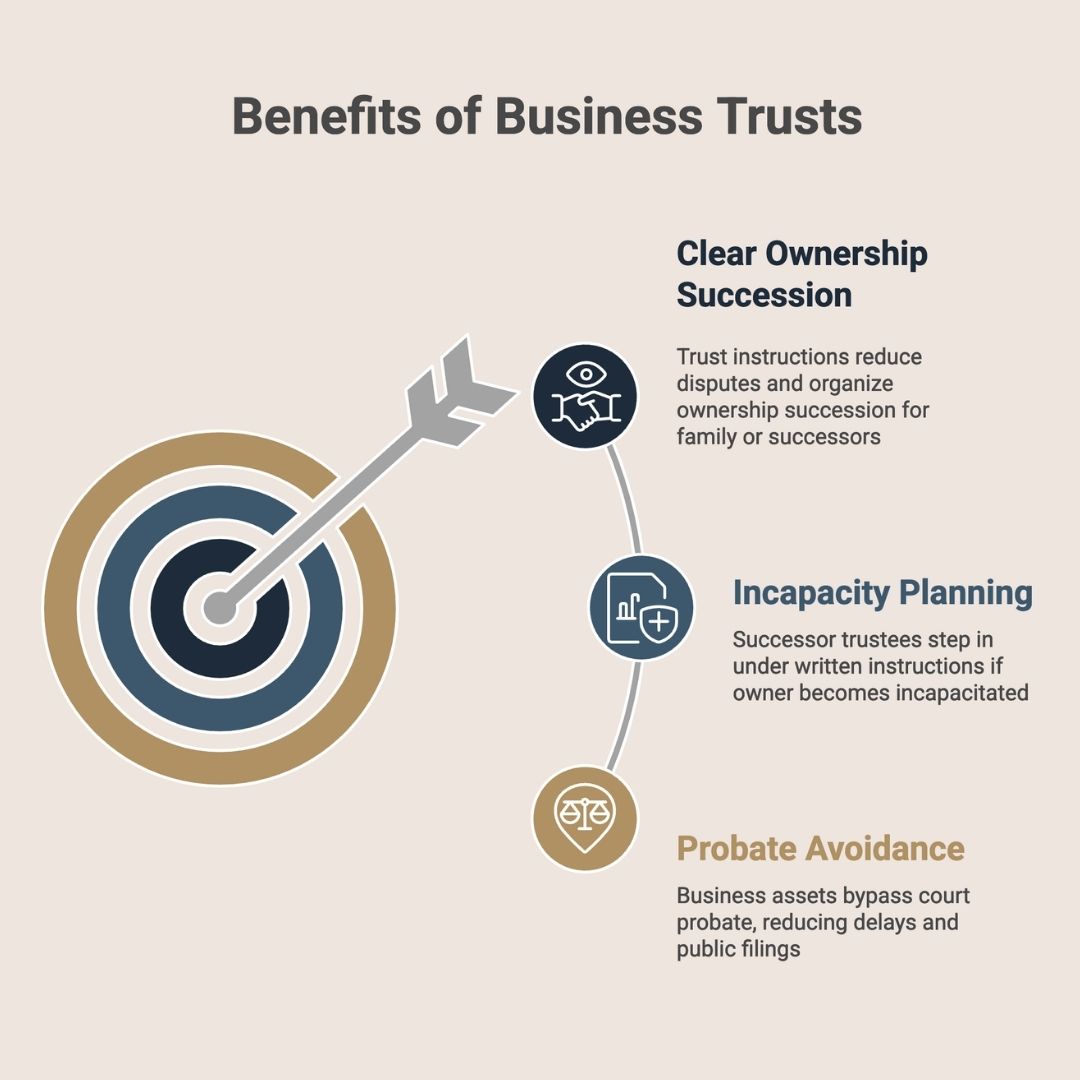
Putting a business into a trust may help reduce probate complications, create clearer incapacity planning, and make future ownership transitions more organized for family members or successors.
Avoiding probate
Probate is the court process used to distribute assets after death. A trust may help business interests transfer outside probate. This can reduce delays, public filings, and operational disruption during ownership transitions.
Planning for incapacity
A trust can create a clearer management plan if a business owner becomes unable to handle operations due to illness or injury.
Successor trustees may step in under written instructions, which can reduce confusion involving contracts, banking authority, and operational decisions.
Keeping business succession clearer
A trust can organize ownership succession more clearly for family businesses and multi-owner companies. Written instructions may reduce disputes involving inheritance expectations, management authority, and future operational control.
Cons of putting a business in a trust

Trust planning also creates legal and administrative responsibilities that owners should review carefully before transferring ownership interests.
Tax and administrative complexity
Some trusts, especially irrevocable trusts, may create additional tax filings, accounting requirements, and administrative responsibilities.
Improper structuring may also affect income reporting or create unintended tax consequences for owners and beneficiaries.
Operating agreement or lender restrictions
Some operating agreements, shareholder agreements, and loan documents restrict ownership transfers into trusts.
Banks and lenders may request additional documentation before approving financing tied to trust-owned businesses.
Trustee control and decision-making risks
Trustee selection matters because they may eventually control important business decisions.
An inexperienced trustee may struggle with management oversight, financial planning, or ownership disputes during transitions.
Should you put your business in a trust?

A business trust may make sense if succession planning, incapacity preparation, and long-term family planning are priorities. The right structure depends on ownership goals, financing agreements, tax exposure, and operational complexity.
Trust planning is often more useful for:
- Family-owned businesses
- Companies with multiple heirs
- Businesses with long-term growth value
- Owners concerned about incapacity planning
- Businesses needing clearer succession instructions
What to review before moving a business into a trust

Business owners should review several legal, financial, and operational documents before transferring ownership interests into a trust. Important documents and planning considerations often include:
- Operating agreements and shareholder agreements: Some agreements contain restrictions that affect ownership transfers or voting rights.
- Loan documents and financing terms: Certain lenders may require approval before ownership moves into a trust.
- Insurance policies and buy-sell agreements: Existing policies and succession documents should align with the trust structure.
- Trustee qualifications and management plans: Trustees should understand the company’s operations and long-term goals.
- Tax considerations and beneficiary expectations: Trust structure and income reporting should be reviewed carefully before finalizing documents.
A trust strategy should support the company’s long-term operational goals instead of creating unnecessary legal mistakes or financial issues later.
Review your business trust options with Birch Grove Legal
Business trust planning can affect ownership transfers, succession planning, financing agreements, and future management decisions. Reviewing these details early may help reduce legal issues and operational disruptions later.
If you are considering placing a business into a trust, speaking with an attorney may help clarify how ownership structure, trustee authority, and long-term planning goals fit together.
Book a Free Consultation with Birch Grove Legal to review your business and estate planning considerations.
Frequently asked questions
Can a trust own 100% of an LLC?
Yes. A trust can legally own 100% of an LLC by holding all membership interests in the company. Other owners use this structure to simplify succession planning and reduce probate issues while keeping the LLC’s liability protection active.
Do trusts have to pay taxes every year?
Some trusts must file annual tax returns, but tax treatment depends on the trust type. Revocable living trusts usually report income through the owner’s personal return, while irrevocable trusts may have separate filing and tax obligations.
What assets should not go into a trust?
Certain assets may require additional review before transferring them into a trust. Retirement accounts, active vehicles, and restricted business interests can create legal, tax, or financing complications if transferred improperly.
Should you put your house in a trust if you own a business?
Placing a home into a trust may help simplify estate planning and reduce probate concerns, especially for business owners managing multiple assets. The decision depends on financing terms, asset protection goals, and long-term family planning.
Is it smart to put your LLC in a trust?
Putting an LLC into a trust may help organize succession planning, incapacity planning, and future ownership transfers. The right approach depends on lender restrictions, tax considerations, operating agreements, and long-term business goals.


0 Comments