
What’s the difference between a business trust and an LLC? It’s a common question because both structures affect ownership, liability protection, and long-term planning in different ways.
An LLC is mainly used for business operations and liability protection, while a business trust is more commonly used for ownership transfers and long-term planning. In some situations, both structures work together as part of a broader legal and estate planning strategy.
Let’s compare how these two structures work.
What is a business trust?

A business trust is a legal arrangement where trustees manage assets or business interests for beneficiaries according to written trust instructions.
Depending on the trust structure, the trustee may control legal ownership, management authority, and asset distribution responsibilities. Business trusts are commonly used for estate planning, privacy, incapacity planning, and long-term ownership transfer planning.
Revocable living trusts allow the person creating the trust to keep control of assets during their lifetime while establishing instructions for future ownership transfers.
What is an LLC?

An LLC, or Limited Liability Company, is a business structure created under state law that helps separate personal assets from business liabilities.
LLCs are used to provide operational flexibility while helping protect owners from personal responsibility for business debts and lawsuits.
In many cases, LLC profits pass directly through to the owner’s personal tax return instead of being taxed at the company level.
For small and mid-sized businesses, LLCs are often easier to manage than corporations because they usually involve fewer formal meeting and reporting requirements.
Key differences between a business trust and an LLC
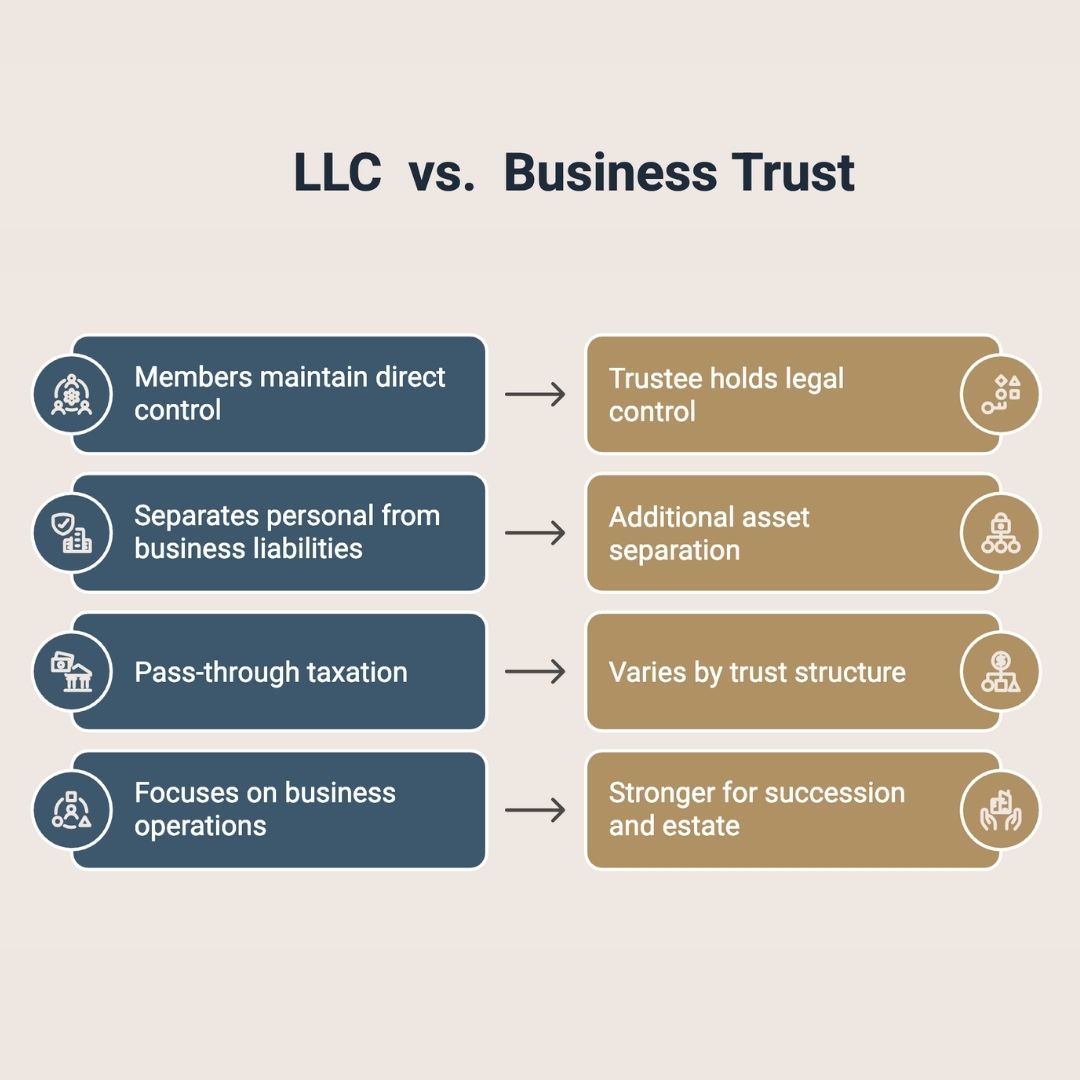
A business trust and an LLC differ in ownership structure, management authority, privacy protections, taxation, and long-term planning goals.
Ownership and control
LLC owners, called members, usually maintain direct control over business operations and management decisions.
In a trust structure, the trustee holds legal control of the assets and manages them according to the trust terms for the benefit of the beneficiaries.
Liability protection
An LLC helps separate personal assets from business liabilities and lawsuits connected to company operations.
A trust may provide additional asset separation because trustees hold legal title to trust assets instead of beneficiaries personally owning them.
Taxes and administration
LLCs commonly use pass-through taxation, which means profits and losses flow directly onto personal tax returns.
Trust taxation depends on the trust structure. Revocable and irrevocable trusts may involve different filing requirements, tax treatment, and administrative responsibilities.
Succession and estate planning
Trusts are often stronger tools for succession planning and long-term estate organization.
An LLC focuses primarily on business operations, while trusts help organize ownership transfers, incapacity planning, and inheritance instructions.
Living trust vs. LLC for business owners

An LLC usually handles business operations, contracts, liability protection, payroll, and management structure. A living trust is more commonly used to organize ownership transfers and long-term estate planning.
When a living trust may own an LLC interest
A living trust may own LLC membership interests when a business owner wants more organized succession planning and smoother ownership transfers later.
This structure may also help reduce probate concerns if ownership needs to transfer after death or incapacity.
When the LLC still handles business operations
The LLC usually continues handling daily business operations even if a trust owns the membership interests.
Business contracts, payroll, employees, licensing, and liability protection generally remain under the LLC structure itself.
Can a trust and an LLC work together?

Many business owners use both an LLC and a trust together as part of a broader legal and estate planning strategy.
In many situations, the LLC manages business operations while the trust owns the LLC interests. This approach may help combine operational flexibility with long-term succession planning and asset organization.
This structure is often useful for:
- Family-owned businesses
- Companies with multiple heirs
- Businesses with long-term growth value
- Owners planning for incapacity
- Owners seeking more private ownership transfers
Which option fits your legal and business goals?
The right structure depends on how the business operates, how ownership should transfer later, and how much control the owner wants to maintain.
An LLC may make more sense for owners prioritizing operational flexibility, liability protection, and simpler business management.
A trust may become more valuable when succession planning, privacy, and long-term estate organization are major priorities.
Some owners also benefit from combining both structures instead of relying entirely on one legal arrangement. Financing agreements, ownership structure, tax treatment, and future management plans should all be reviewed before making changes.
Decide between a business trust, LLC, or both with Birch Grove Legal
Choosing between a business trust, an LLC, or a combined structure can affect liability protection, ownership transfers, succession planning, and long-term business control. The right structure depends on how the business operates today and how ownership should be managed later.
Reviewing these decisions early may help reduce future legal disputes, operational disruptions, and estate planning issues. Speaking with an estate planning attorney can help business owners better understand how trust planning, LLC structures, and long-term ownership goals work together.
Book a Free Consultation with Birchgrove Legal today.
Frequently asked questions
Should I set up a trust or LLC first?
Usually, the LLC comes first because it creates the legal business entity. After the LLC is formed, ownership interests can later transfer into a trust for succession and estate planning purposes.
Is it wise to put an LLC into a trust?
It can be beneficial for owners focused on succession planning and probate avoidance. Placing LLC interests into a trust may help organize future ownership transfers while allowing the LLC to continue handling daily operations.
Does a business trust pay taxes?
Some business trusts file separate tax returns, while others pass income directly to beneficiaries or the trust creator. Tax treatment depends on the trust structure, income type, and how the trust was created.
Who controls a business trust?
The trustee controls the trust according to the trust agreement. Depending on the structure, the person creating the trust may still retain control during their lifetime through a revocable living trust.
What should you not put in a trust?
Certain assets may require additional review before transferring them into a trust. Retirement accounts, restricted business interests, and assets tied to financing agreements can create legal or tax issues if transferred improperly.


0 Comments