
A testamentary trust is a legal arrangement created through a will. It takes effect at death, and a trustee manages the assets for the beneficiaries under the trust’s terms.
You may want to leave money to someone without giving them the full amount all at once. Young children need an adult to manage their inheritance, and an adult beneficiary may need help managing money. Before you include one in your Colorado estate plan, think about who could manage those assets and how you’d like them distributed.
How a will creates a testamentary trust

Under Colorado Revised Statutes § 15-5-401, you can use a will to direct property into a trust at death. The will names the beneficiaries and the trustee and sets rules for managing and distributing assets.
The instructions should identify the property or share of the estate going into the trust and explain when beneficiaries can receive funds. Simply asking a relative to “look after the money” leaves key questions open.
When is a testamentary trust created and funded?
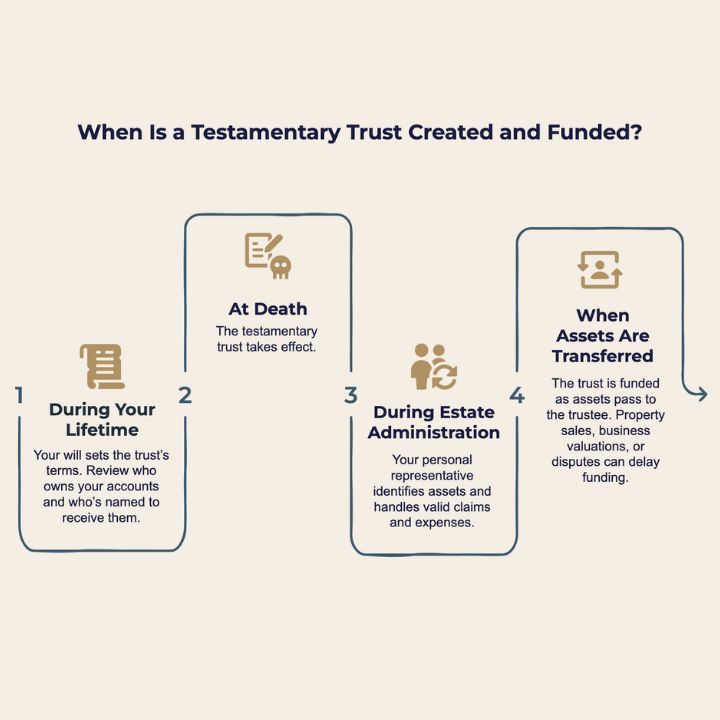
The will sets out the trust’s terms during your lifetime. The trust takes effect at death, and funding happens later as assets pass to the trustee during estate administration.
The personal representative, who handles the estate after death, identifies estate assets, addresses valid claims and expenses, and arranges transfers to the trustee. Funding can take time, especially when the estate includes property to sell, a business to value, or a dispute to resolve.
Review account ownership and beneficiary designations to make sure the intended assets reach the trustee. For example, an account with a valid designation naming an individual generally passes directly to that person.
Who manages assets in a testamentary trust?

The trustee manages the property transferred to the trust. One person can serve as personal representative and trustee. The personal representative settles the estate, and the trustee administers the trust.
A trustee is a fiduciary, which means they have a legal duty to act in the beneficiaries’ interests and follow the trust’s terms.
- Protect and manage trust property.
- Make payments the trust terms allow.
- Track income, expenses, investments, and distributions.
- Provide notices, reports, and information required by law.
Choose someone with the time, judgment, and willingness to do the work. Name a successor trustee who can step in if your first choice can’t serve.
Is a testamentary trust revocable or irrevocable?

A testamentary trust is irrevocable once it takes effect. During your lifetime, you can change or remove the trust provisions by revising your will, provided you have legal capacity and follow Colorado’s requirements for making a valid change.
Changes after death depend on the trust’s terms and Colorado law. Under C.R.S. § 15-5-412, a court may modify or end a trust if unexpected circumstances mean doing so would better serve its purpose. A court can also change how the trust is managed if its current terms make administration impractical or wasteful.
A simple testamentary trust example

Suppose a parent’s will directs the child’s share of the estate into a trust. The will names the parent’s sister as trustee and allows payments for the child’s education, health, and living expenses. It directs the trustee to distribute the remaining balance when the child turns 25.
After the parent’s death, the sister manages the assets transferred to the trust and approves payments under its terms.
The trustee manages the inheritance, while a guardian cares for the child. The plan should address both responsibilities.
When a testamentary trust fits your family

Consider one if you have minor children, want to spread payments over time, or expect a beneficiary to need help managing money. The payment rules can reflect each beneficiary’s needs.
An outright inheritance can affect eligibility for needs-based benefits. A properly drafted and administered special needs trust may help preserve eligibility, depending on the program and how the trust makes payments.
If you also want someone to act for you during your lifetime, consider separate documents such as a financial power of attorney and a medical power of attorney.
Potential disadvantages of a testamentary trust

Assets used to fund the trust through a will generally go through probate. The trust then adds its own administrative work and costs.
When a will is filed in probate, the trust terms written into it may be accessible through the court record. Once funded, the trust may involve trustee fees, investment expenses, accounting costs, and tax filings.
Terms that look sensible now can become restrictive as a beneficiary’s situation changes. Give the trustee clear instructions about what they can pay for and where they can use their judgment.
The estate still has to address valid creditor claims and any taxes it owes.
Testamentary trust vs. living trust in Colorado
A testamentary trust can work if you only need someone to manage an inheritance after your death. A living trust can hold property while you’re alive, provide for asset management if you become incapacitated, and let assets held in the trust pass outside probate.
Birch Grove Legal can help you compare these options based on what you own, how it’s titled, and what your beneficiaries may need. Call (720) 713-7093 or book a free consultation.
FAQs about testamentary trusts
What is the primary purpose of a testamentary trust?
It gives a trustee responsibility for managing and distributing an inheritance under the will’s instructions. For example, the will can let the trustee pay for school or other expenses before the beneficiary receives the remaining assets.
Does a testamentary trust avoid probate?
No. Assets that pass into the trust through a will generally go through probate first. Assets with a valid beneficiary designation or a right of survivorship may pass outside probate under separate rules.
How long can a testamentary trust last?
Its duration depends on the trust terms and applicable law. It may end when a beneficiary reaches a set age, continue for a beneficiary’s lifetime, or end when its purpose is fulfilled.
Can a testamentary trust hold real estate?
Yes. The will can direct real estate that passes through your estate into the trust. The terms should cover management, expenses, who can live in the property, and any future sale. Mortgages, shared ownership, and out-of-state property need extra review.
How much does it cost to set up a testamentary trust?
The cost depends on the complexity of the will and trust instructions, as well as attorney fees. Probate and ongoing trust administration can add expenses after death. Ask which costs apply to drafting now and which may arise after death.



0 Comments